
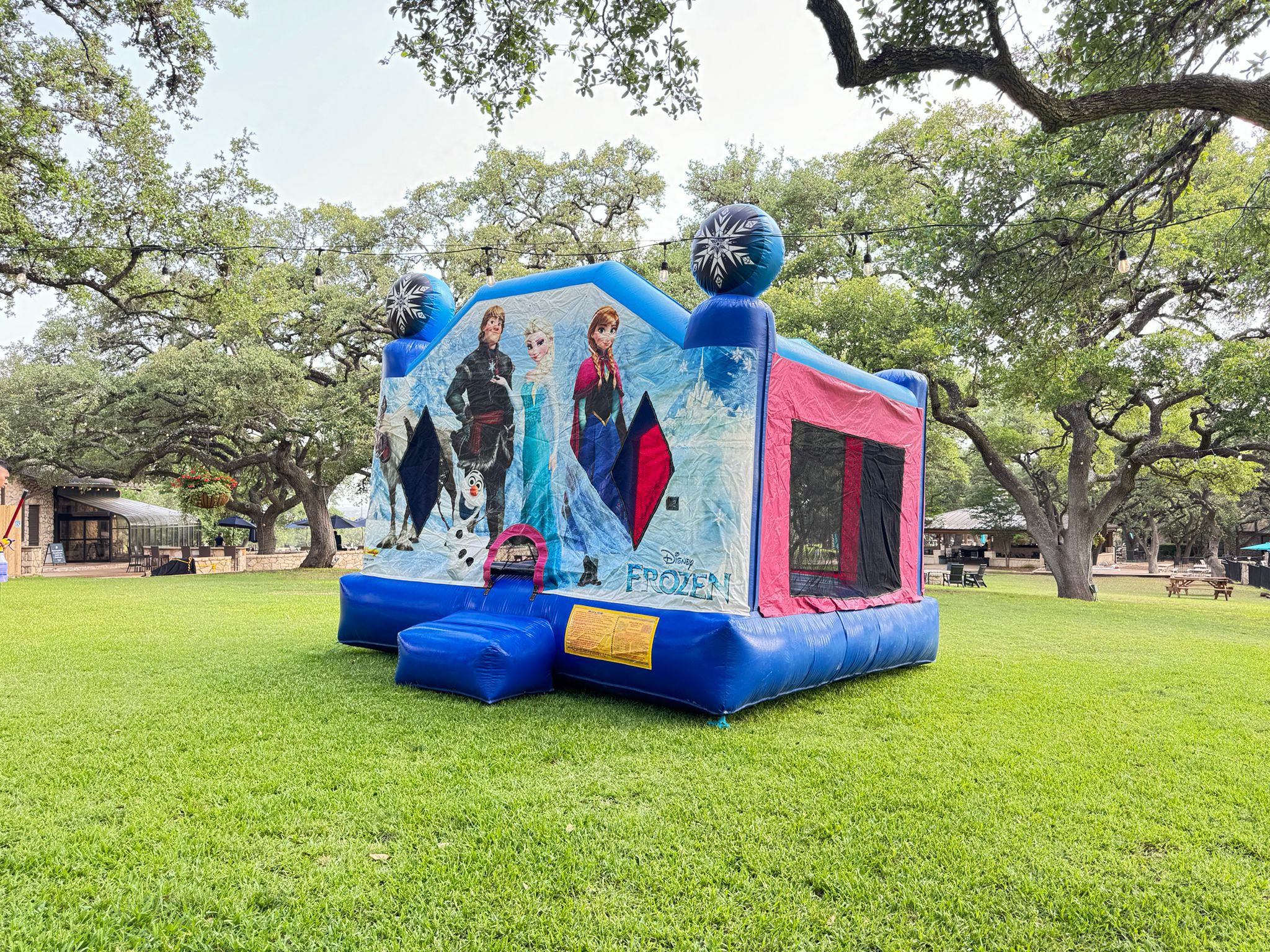
A common concern among homeowners is whether a bounce house will damage their grass and the short answer is, it can, but only if it’s left in place for too long. If you leave a bounce house on your lawn for several days, the lack of sunlight and air circulation can cause the grass underneath to yellow or die off. However, having a bounce house set up for just one day is usually safe and won’t cause lasting harm. With a few simple precautions, you can protect your lawn and still enjoy all the fun an inflatable has to offer. Keep reading to learn how to protect your yard before, during, and after your inflatable rental.
What Really Happens to Grass Under Bounce Houses
Short-Term Effects (0–24 Hours)
When a bounce house is placed on your lawn for less than a day, you may notice flattened grass blades, which typically recover within 12 to 48 hours. There might also be slight discoloration due to reduced sunlight exposure, and mild soil compaction in high-traffic areas where kids enter and exit the inflatable.
Long-Term Effects (2+ Days)
Leaving a bounce house on your lawn for more than two days can lead to yellow or brown patches caused by grass suffocation from lack of light and air. Over time, you may also see thinning turf, as the constant weight can break the blades. Additionally, soil compression may occur, making it harder for your lawn to absorb water and nutrients effectively.
5 Ways to Protect Your Lawn When Using a Bounce House
- Limit Setup Time
Try to limit bounce house use to under 8 hours per day. This reduces stress on the grass and minimizes the risk of suffocation. After each use, allow your lawn at least 24 hours of recovery time before setting up again. - Choose the Right Location
Select a spot with established, mixed grass varieties like rye or fescue, which recover quickly from temporary stress. Avoid placing inflatables on new sod (less than 6 months old) or lawns already stressed by drought, as they are more likely to suffer damage. - Time It Right
Set up when your grass is dry but healthy, not during drought dormancy. The worst time to install a bounce house is right after heavy rain, as saturated soil and moisture trapped beneath the unit can lead to fungal growth and root damage. - Post-Event Lawn Care
After removing the bounce house, gently fluff the flattened grass using a leaf rake to restore airflow. Then water the area deeply, about one inch, to help the roots recover. If the lawn looks stressed, consider applying a light fertilizer to promote healthy regrowth. - Rotate Locations (Optional for Multi-Day Events)
If you’re using the inflatable for multiple days, rotate its position each day to prevent over compaction and give grass time to bounce back.
FAQs About Bounce Houses and Grass
Will my grass die if I leave a bounce house up overnight?
Leaving a bounce house up for just one night typically won’t kill your grass, especially if it’s healthy and well-maintained. However, if it remains in place for three or more consecutive days, the lack of sunlight and air circulation can begin to suffocate the grass, leading to yellowing or dead patches.
Do inflatable water slides damage grass more than dry bounce houses?
Yes, inflatable water slides are more likely to damage your lawn. The combination of constant weight, moisture, and foot traffic increases the risk of grass suffocation and root rot, especially if the slide stays in place for an extended period.
What’s the best surface for setting up a bounce house?
A flat, healthy lawn is usually the best surface for short-term bounce house use. However, if you’re planning a multi-day setup or want to minimize lawn impact, consider alternatives like artificial turf, gravel pads, or deck and patio areasfor better durability and less lawn stress.
Can I put a tarp under my bounce house?
Yes, but it’s important to use a breathable tarp. Avoid solid plastic tarps, as they trap heat and moisture, which can damage or even “cook” your grass in as little as two hours on a hot day. Breathable materials allow some airflow and are much safer for your lawn.
Bottom Line: When to Consider Alternatives
If you’re concerned about lawn damage, it may be time to consider other options. To protect your grass, aim for shorter rental periods (4–6 hours), set up on hard surfaces like patios or turf when available, and schedule rentals between mowings, as grass recovers best when it’s about 3–4 inches tall.
Ready to plan a fun, lawn-friendly event? Contact Jump N Slide Texas today to find the perfect setup for your space!